
25–30°C
Ideal temp

A Collaboration of


Kharif and Zaid Crop · Cucurbitaceae Family
Cucumber is a fast-growing, warm-season vegetable grown across India in two seasons. It is cultivated for fresh salad markets, domestic use, and juice consumption. The crop has a total field duration of 75–90 days with a continuous harvest window of 4 to 6 weeks.
 First harvest: 45–55 days
 Two seasons: Zaid and Kharif
 Optimal temp: 25–30°C
 60–80 qtl per acre
25–30°C
Ideal temp
Sandy loam, pH 6.0–7.0
Best soil
45–55 days
First harvest
75–90 days
Total duration
60–80 qtl
Yield/acre
Feb–Apr (temp 25–30°C)
Zaid sowing
June–July (temp 25–32°C)
Kharif sowing
Cucumber completes five growth stages from germination to the end of the harvest period. Total crop duration is 75 to 90 days.
Germination
Day 4–7
Vine growth
Day 15–20
Flowering
Day 30–35
First harvest
Day 45–55
Season ends
Day 75–90
Basic agronomic and physical characteristics of the Cucumber crop.
Plant type
Trailing or climbing vine
Fruit colour
Green, smooth to slightly ribbed surface
Fruit length
15–25 cm
Taste
Mild, crisp, watery
Water need
Once a week; more frequent during flowering and fruiting
Temperature
25–30°C optimal growth
Variety selection depends on cropping season, soil type, and target market. Hybrid varieties generally produce higher and more uniform yields. Open pollinated varieties have lower seed cost.
Light green fruits 15 cm, matures in 50–55 days, yield 65 qtl/acre; developed by IARI for North India
Developed for Kharif season; highly resistant to humidity and temperature fluctuations
Long green fruits; developed by IARI for spring-summer and Kharif; suited for Punjab, UP, Bihar, and Jharkhand
Dark green uniform fruits; early maturing; widely adapted for North India plains
High yield potential, suitable for commercial markets; developed by ICAR-IIHR Bengaluru
Suited for Kharif season cultivation; tolerant to training system management
Indicative figures for one acre under standard management conditions. Actual returns vary with season, variety, and market access.
Common pests, diseases, and management issues in cucumber cultivation. Early identification and timely management help reduce crop loss.
Larvae infest fruit internally causing premature dropping and rotting, making fruit unmarketable. Install cucurbit fruit fly traps at 4 per acre. Collect and destroy infested fruits. Monitor field every 3 to 4 days from 30–35 days after sowing.
White powdery fungal growth on leaves, stems, and petioles; infected leaves wither and die, reducing fruit yield and size. Spray Sulphur fungicide or Hexaconazole at first sign of infection. Ensure proper plant spacing for air circulation.
Yellow angular spots on upper leaf surface; grey-purple fungal growth underneath. Spray Mancozeb or Chlorothalonil 2 gm per litre of water twice at 10-day intervals. Avoid overhead irrigation.
Leaf curling, yellowing, and stunted growth; aphids also act as vectors for mosaic virus. Spray Imidacloprid 70 WG 1.0 gm per 10 litres of water. Remove heavily infested plant parts promptly.
The crop is sensitive to root zone saturation. Use raised beds with good drainage on both sides, especially during Kharif season.
Cucumber is grown commercially across a range of agro-climatic zones in India.
 Hindi
05:06
Hindi
05:06
Soil Preparation and Land Levelling
Hindi
05:28
Soil Preparation and Land Levelling
Hindi
04:52
Soil Preparation and Land Levelling
Hindi
06:10
Sowing Methods and Best Practices
Hindi
05:45
Sowing Methods and Best Practices
Hindi
07:20
Irrigation Scheduling for Wheat
Hindi08:00
Fertilizer Application
Hindi06:30
Fertilizer Application
Hindi05:45
Fertilizer Application
Hindi09:15
Harvesting and Threshing
Hindi07:40
Harvesting and Threshing
Hindi06:22
Harvesting and Threshing


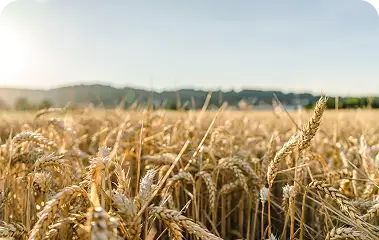
Wheat is grown as a Rabi crop, sown from October to December and harvested from March to May.
Punjab, Haryana, Uttar Pradesh, Rajasthan, Bihar, and Madhya Pradesh are among the major wheat-producing states.
Wheat is grown as a Rabi crop, sown from October to December and harvested from March to May.
Punjab, Haryana, Uttar Pradesh, Rajasthan, Bihar, and Madhya Pradesh are among the major wheat-producing states.


