
18–25°C
Ideal temp

A Collaboration of


Rabi and Kharif Crop · Solanaceae Family
Capsicum is a warm to cool-season vegetable grown across India in two seasons under open field and protected conditions. It is cultivated for fresh markets, processing, and export. The crop has a total field duration of 150–160 days with harvesting of green fruits beginning at 60–75 days after transplanting.
 First harvest: 60–75 days after transplanting
 Two seasons: Rabi and Kharif
 Optimal temp: 18–25°C
 60–80 qtl per acre (open field)
18–25°C
Ideal temp
Well-drained sandy loam, rich in organic matter
Best soil
60–75 days after transplant
First harvest
150–160 days
Total duration
60–80 qtl (open field)
Yield/acre
Sept–Oct nursery; Nov–Feb transplant
Rabi sowing
Jun–Jul nursery; Aug–Sept transplant
Kharif sowing
Capsicum completes five growth stages from nursery sowing to the end of the harvest period. Total crop duration is 150 to 160 days.
Nursery and germination
Day 1–10
Seedling establishment
Day 10–40
Vegetative growth after transplant
Day 40–60
Flowering and fruit set
Day 60–75
Harvest period
Day 75–160
Basic agronomic and physical characteristics of the Capsicum crop.
Plant type
Erect bushy shrub
Fruit colour
Green (immature), red, yellow or orange (mature)
Fruit shape
Blocky to elongated bell-shaped
Dual use
Sweet, mild, no pungency
Water need
Weekly or every 10 days; avoid waterlogging
Temperature
18–25°C optimal; fruit set fails outside 12–35°C
Variety selection depends on cropping season, soil type, and target market. Hybrid varieties generally produce higher and more uniform yields. Open pollinated varieties have lower seed cost.
Blocky green fruits turning red on maturity; developed by ICAR-IIHR Bengaluru; suited for open field cultivation
Yellow fruited variety; mild sweet flavour; developed by ICAR-IIHR Bengaluru; preferred in export markets
Red fruited variety; high yielding; suitable for fresh markets and processing
High yielding F1 hybrid with powdery mildew tolerance; suitable for fresh green market; yield 450–500 q/ha
Dark green blocky fruits; high yield potential; widely used for commercial cultivation across India
Medium sized green fruits; widely adaptable; low seed cost; suitable for North India plains
Indicative figures for one acre under standard management conditions. Actual returns vary with season, variety, and market access.
Common pests, diseases, and management issues in capsicum cultivation. Early identification and timely management help reduce crop loss.
Most serious pest of capsicum; causes leaf curling, deformed flower buds, and irregular fruit bearing; heavy infestation leads to blackening and drying of leaves. Monitor from transplanting stage. Apply recommended insecticide at first sign of infestation; avoid application during peak flowering hours.
Adults lay eggs on fruits, flowers, and leaves; larvae feed on fruit internally making it unmarketable. Most active during night. Monitor from flowering stage onwards. Remove and destroy infested fruits immediately.
White powdery growth on leaves and stems; reduces fruit size and yield. Spray Wettable Sulphur 2 gm per litre of water at first sign of infection. Use tolerant varieties like Arka Atulya where available.
Stem and branch dieback from tip downwards; fruit develops dark sunken lesions. Spray Mancozeb 2 gm per litre of water at first sign. Remove and destroy infected plant parts promptly.
Capsicum is highly sensitive to excess soil moisture. Use well-drained raised beds. Prefer drip irrigation and avoid flood irrigation at all growth stages.
Capsicum is grown commercially across a range of agro-climatic zones in India.
 Hindi
05:06
Hindi
05:06
Soil Preparation and Land Levelling
Hindi
05:28
Soil Preparation and Land Levelling
Hindi
04:52
Soil Preparation and Land Levelling
Hindi
06:10
Sowing Methods and Best Practices
Hindi
05:45
Sowing Methods and Best Practices
Hindi
07:20
Irrigation Scheduling for Wheat
Hindi08:00
Fertilizer Application
Hindi06:30
Fertilizer Application
Hindi05:45
Fertilizer Application
Hindi09:15
Harvesting and Threshing
Hindi07:40
Harvesting and Threshing
Hindi06:22
Harvesting and Threshing

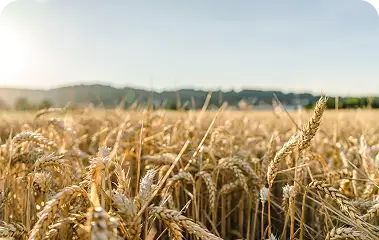
Wheat is grown as a Rabi crop, sown from October to December and harvested from March to May.
Punjab, Haryana, Uttar Pradesh, Rajasthan, Bihar, and Madhya Pradesh are among the major wheat-producing states.
Wheat is grown as a Rabi crop, sown from October to December and harvested from March to May.
Punjab, Haryana, Uttar Pradesh, Rajasthan, Bihar, and Madhya Pradesh are among the major wheat-producing states.


