
15–32°C
Ideal temp

A Collaboration of


Kharif, Rabi and Zaid Crop · Solanaceae Family
Brinjal is a hardy, warm-season vegetable grown across India in all three seasons. It is cultivated for fresh vegetable markets and domestic use. India is the second largest producer of brinjal after China. The crop has a total field duration of 120–150 days with first harvest beginning at 55–70 days after transplanting and a continuous harvest window of 3 to 4 months.
 First harvest: 55–70 days after transplanting
 Three seasons: Kharif, Rabi and Zaid
 Optimal temp: 15–32°C
 130–270 qtl per acre
15–32°C
Ideal temp
Well-drained fertile sandy loam, pH 5.5–6.6
Best soil
55–70 days
First harvest
120–150 days
Total duration
130–270 qtl (variety dependent)
Yield/acre
Oct nursery; transplant Nov (temp 15–20°C)
Rabi sowing
Nov nursery; transplant Feb (temp 20–28°C)
Zaid sowing
July nursery; transplant Aug (temp 28–32°C)
Kharif sowing
Brinjal completes five growth stages from nursery sowing to the end of the harvest period. Total crop duration is 120 to 150 days.
Nursery and germination
नर्सरी और अंकुरण
Seedling establishment
Day 10–30
Vegetative growth after transplant
Day 30–55
Flowering and fruit set
Day 55–70
Harvest period
Day 70–150
Basic agronomic and physical characteristics of the Brinjal crop.
Plant type
Erect branching shrub
Fruit colour
Dark purple, light purple, greenish white or black-purple
Fruit shape
Round, oval, or long
Taste
Mild, slightly bitter when overripe
Water need
Every 3–4 days in summer; every 12–15 days in winter
Temperature
15–32°C optimal; fruit set reduces below 15°C
Variety selection depends on cropping season, soil type, and target market. Hybrid varieties generally produce higher and more uniform yields. Open pollinated varieties have lower seed cost.
Early maturing; ready to harvest in 70–80 days (winter) and 100–110 days (summer); medium height plant; long purple fruits; yield 130 qtl/acre
Developed by IARI New Delhi; deep purple fruits borne in clusters; medium duration; moderately resistant to bacterial wilt
Developed by PAU Ludhiana; plant height 93 cm; round dark purple shining fruits with fewer seeds; yield 190 qtl/acre
Developed by PAU Ludhiana; tolerant to fruit and shoot borer; medium-sized long purple fruits; yield 140 qtl/acre
Released 2017 by PAU; long shining black-purple fruits; high yield potential; yield 225 qtl/acre
Developed by ICAR-IIHR Bengaluru; long light purple fruits; tolerant to shoot and fruit borer; suitable for South and Central India
Indicative figures for one acre under standard management conditions. Actual returns vary with season, variety, and market access.
Common pests, diseases, and management issues in brinjal cultivation. Early identification and timely management help reduce crop loss.
Most serious pest of brinjal; pinkish caterpillar bores into terminal shoots causing drooping. Scout field every week after transplanting. Remove and destroy infested shoots and fruits immediately. Spray Chlorantraniliprole 18.5% SC 5 ml per 12 litres of water twice at 20-day intervals during flowering stage.
Suck sap from leaves and flowers causing silvery patches, curling and premature flower drop. Keep blue sticky traps at 6–8 per acre. If incidence is high spray Fipronil 2 ml per litre of water.
Suck sap from leaves causing yellowing and drooping; whitefly also transmits viral diseases. Spray Acetamiprid 5 gm per 15 litres of water for whitefly. For aphids spray Dimethoate plus Triazophos combination 10 ml per 10 litres of water.
Dark brown spots appear on leaves; fruits show watery lesions turning black. Treat seeds with Thiram 3 gm per kg before sowing. If infestation is observed, spray Mancozeb 2.5 gm per litre of water.
The entire plant wilts suddenly; if the infected stem is cut and dipped in water a white milky stream appears. Follow crop rotation; avoid monocropping. Remove and destroy infected plants immediately. Drench soil with Copper Oxychloride 2.5 gm per litre of water.
Brinjal cannot tolerate water stagnation; causes root rot and wilting. Use well-drained raised beds. Avoid flood irrigation especially during Kharif season.
Brinjal is grown commercially across a range of agro-climatic zones in India.
 Hindi
05:06
Hindi
05:06
Soil Preparation and Land Levelling
Hindi
05:28
Soil Preparation and Land Levelling
Hindi
04:52
Soil Preparation and Land Levelling
Hindi
06:10
Sowing Methods and Best Practices
Hindi
05:45
Sowing Methods and Best Practices
Hindi
07:20
Irrigation Scheduling for Wheat
Hindi08:00
Fertilizer Application
Hindi06:30
Fertilizer Application
Hindi05:45
Fertilizer Application
Hindi09:15
Harvesting and Threshing
Hindi07:40
Harvesting and Threshing
Hindi06:22
Harvesting and Threshing


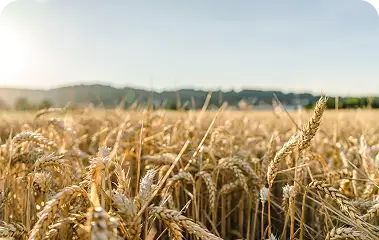
Wheat is grown as a Rabi crop, sown from October to December and harvested from March to May.
Punjab, Haryana, Uttar Pradesh, Rajasthan, Bihar, and Madhya Pradesh are among the major wheat-producing states.
Wheat is grown as a Rabi crop, sown from October to December and harvested from March to May.
Punjab, Haryana, Uttar Pradesh, Rajasthan, Bihar, and Madhya Pradesh are among the major wheat-producing states.


