
12–25°C
Ideal temp

A Collaboration of


Rabi Crop · Brassicaceae Family
Cauliflower is a cool-season vegetable grown across India primarily as a Rabi crop in three maturity groups — early, main season, and late. It is cultivated for fresh vegetable markets and domestic use. The crop has a total field duration of 90–150 days depending on variety group, with curd harvest beginning at 60–90 days after transplanting.
 First harvest: 60–90 days after transplanting
 Primary season: Rabi (early, main season, and late maturity groups)
 Optimal temp: 12–25°C
 80–125 qtl per acre
12–25°C
Ideal temp
Deep loamy to sandy loam, pH 5.5–6.6
Best soil
60–90 days after transplant
First harvest
90–150 days
Total duration
80–125 qtl
Yield/acre
Jun–Jul nursery; Aug–Sept transplant
Early variety
Aug–Sept nursery; Sept–Oct transplant
Main season
Cauliflower completes five growth stages from nursery sowing to the end of the harvest period. Total crop duration is 90 to 150 days depending on variety group.
Nursery and germination
Day 1–7
Seedling establishment
Day 7–30
Vegetative growth after transplant
Day 30–55
Curd initiation and development
Day 55–90
Harvest period
Day 90–150
Basic agronomic and physical characteristics of the Cauliflower crop.
Plant type
Erect rosette with broad outer leaves
Curd colour
Snow white to creamy white
Curd size
Medium to large, compact
Taste
Mild, tender
Water need
Every 7–10 days; 10–15 days in winter
Temperature
12–25°C optimal; curd fails above 30°C
Variety selection depends on cropping season, soil type, and target market. Hybrid varieties generally produce higher and more uniform yields. Open pollinated varieties have lower seed cost.
Developed by IARI; medium-sized white curd; matures in 80–90 days after transplanting; yield 48 qtl/acre; suitable for North India
Creamy white curd; early maturing; suitable for North India plains; yield 80 qtl/acre
Snow white compact curd; outer leaves upright; matures 100 days after transplanting; yield 90 qtl/acre
Snow white compact curd; late maturing; outer leaves upright; yield 90 qtl/acre; suitable for North India
Compact attractive white curd; late maturing; yield 100–125 qtl/acre
Developed by ICAR-IIHR Bengaluru; suitable for plains; medium-sized white compact curd
Indicative figures for one acre under standard management conditions. Actual returns vary with season, variety, and market access.
Common pests, diseases, and management issues in cauliflower cultivation. Early identification and timely management help reduce crop loss.
Most serious pest of cauliflower; greenish hairy larvae feed on leaves making holes; can cause 80–90% crop loss if uncontrolled. Install pheromone traps at 12 per hectare. Spray Bacillus thuringiensis 1 gm per litre at primordial stage. In severe infestation spray Spinosad 2.5% SC at 1.2 ml per litre.
Suck sap from leaves causing yellowing and drooping; also spread viral diseases. Install yellow sticky traps at 12 per hectare. Spray Imidacloprid 17.8 SL 60 ml per acre in 150 litres of water or Dimethoate 30% EC 7 ml per 10 litres of water.
Purplish-brown spots on lower leaf surface with greyish-white mold underneath. Spray Metalaxyl + Mancozeb 2 gm per litre with 3 sprays at 10-day intervals. Adopt crop rotation and field sanitation.
Roots form club-shaped swellings; plants wilt and show stunted growth; caused by Plasmodiophora brassicae. Avoid re-planting crucifers on the same field for three years. Treat seedlings in Carbendazim 2 gm per litre before transplanting.
Hollow and discoloured stems; curd turns brown; leaves curl and roll. Apply Borax 250–400 gm per acre as foliar spray 30 days after transplanting.
Cauliflower is grown commercially across a range of agro-climatic zones in India.
 Hindi
05:06
Hindi
05:06
Soil Preparation and Land Levelling
Hindi
05:28
Soil Preparation and Land Levelling
Hindi
04:52
Soil Preparation and Land Levelling
Hindi
06:10
Sowing Methods and Best Practices
Hindi
05:45
Sowing Methods and Best Practices
Hindi
07:20
Irrigation Scheduling for Wheat
Hindi08:00
Fertilizer Application
Hindi06:30
Fertilizer Application
Hindi05:45
Fertilizer Application
Hindi09:15
Harvesting and Threshing
Hindi07:40
Harvesting and Threshing
Hindi06:22
Harvesting and Threshing

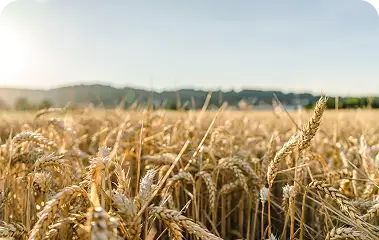
Wheat is grown as a Rabi crop, sown from October to December and harvested from March to May.
Punjab, Haryana, Uttar Pradesh, Rajasthan, Bihar, and Madhya Pradesh are among the major wheat-producing states.
Wheat is grown as a Rabi crop, sown from October to December and harvested from March to May.
Punjab, Haryana, Uttar Pradesh, Rajasthan, Bihar, and Madhya Pradesh are among the major wheat-producing states.


