
18–30°C
Ideal temp

A Collaboration of


Rabi and Summer Crop · Cucurbitaceae Family
Zucchini is a fast-growing, warm-season vegetable grown across India in two seasons. It is cultivated primarily for fresh urban and export markets. The crop has a total field duration of 90–120 days with first harvest beginning at 35–55 days after sowing.
 First harvest: 35–55 days
 Two seasons: Rabi and Summer
 Optimal temp: 18–30°C
 50–80 qtl per acre
18–30°C
Ideal temp
Well-drained loam or sandy loam, pH 6.0–7.5
Best soil
35–55 days
First harvest
90–120 days
Total duration
50–80 qtl
Yield/acre
Sept–Feb (18–25°C)
Rabi sowing
Feb–June (24–30°C)
Summer sowing
Zucchini completes five growth stages from germination to the end of the harvest period. Total crop duration is 90 to 120 days.
Germination
Day 4–7
Vegetative growth
Day 15–20
Flowering
Day 28–35
First harvest
Day 35–55
Season ends
Day 90–120
Basic agronomic and physical characteristics of the Zucchini crop.
Plant type
Bushy, non-climbing
Leaf colour
Dark green, yellow, or striped
Seed colour
15–25 cm
Dual use
Mild, tender when harvested young
Water need
Regular drip; avoid overhead watering
Temperature
18–30°C optimal growth
Variety selection depends on cropping season, soil type, and target market. Hybrid varieties generally produce higher and more uniform yields. Open pollinated varieties have lower seed cost.
Dark green cylindrical fruits; matures in 40–55 days; widely adapted for general cultivation across India
Bright yellow fruits with mild sweet flavour; matures in 60–70 days; preferred in urban and export markets
Green and white striped fruits; matures in 50–60 days; suitable for specialty and gourmet markets
High yield, disease resistant, heat tolerant, uniform fruits; suitable for commercial and polyhouse cultivation
Developed by ICAR-IIHR Bengaluru; suitable for warm humid conditions; good yield across seasons
Uniform fruit sizing for packing lines; align with buyer specifications for urban retail and export
Indicative figures for one acre under standard management conditions. Actual returns vary with season, variety, and market access.
Common pests, diseases, and management issues in zucchini cultivation. Early identification and timely management help reduce crop loss.
White powdery fungal growth on leaves and stems; spreads rapidly in humid conditions with poor air circulation. Apply sulphur-based fungicide or neem oil at first sign of infection. Use drip irrigation and maintain plant spacing for air circulation.
Yellow angular spots on upper leaf surface; grey-purple fungal growth on underside; infected leaves wither quickly. Apply neem oil or organic fungicide on minor infections. Remove heavily infected plants at end of season.
Clusters on stems and leaf undersides; cause yellowing, curling, and stunted growth. Remove heavily infested stems promptly. Apply insecticidal soap or neem oil spray; repeat weekly for two to three applications.
Fewer fruits despite normal flowering; usually caused by low pollinator activity or extreme temperatures. Hand pollinate early morning using a soft brush. Avoid pesticide application during peak flowering hours.
Zucchini is sensitive to root zone saturation. Use well-drained raised beds. Prefer drip irrigation over flood irrigation, especially in Rabi season.
Zucchini is grown commercially across a range of agro-climatic zones in India.
 Hindi
05:06
Hindi
05:06
Soil Preparation and Land Levelling
Hindi
05:28
Soil Preparation and Land Levelling
Hindi
04:52
Soil Preparation and Land Levelling
Hindi
06:10
Sowing Methods and Best Practices
Hindi
05:45
Sowing Methods and Best Practices
Hindi
07:20
Irrigation Scheduling for Wheat
Hindi08:00
Fertilizer Application
Hindi06:30
Fertilizer Application
Hindi05:45
Fertilizer Application
Hindi09:15
Harvesting and Threshing
Hindi07:40
Harvesting and Threshing
Hindi06:22
Harvesting and Threshing


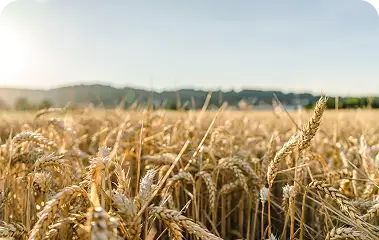
Wheat is grown as a Rabi crop, sown from October to December and harvested from March to May.
Punjab, Haryana, Uttar Pradesh, Rajasthan, Bihar, and Madhya Pradesh are among the major wheat-producing states.
Wheat is grown as a Rabi crop, sown from October to December and harvested from March to May.
Punjab, Haryana, Uttar Pradesh, Rajasthan, Bihar, and Madhya Pradesh are among the major wheat-producing states.


