
17–27°C
Ideal temp

A Collaboration of


Rabi Crop · Apiaceae Family
Coriander is a short-duration, cool-season herb grown across India primarily as a Rabi crop. It is cultivated for green leaves, dry seeds, and essential oil extraction. The crop has a total field duration of 90–120 days with green leaf cuttings beginning from 30–40 days after sowing.
 First harvest: 30–40 days (green leaves)
 Primary season: Rabi; limited Kharif in MP and TN
 Optimal temp: 17–27°C
 4–8 qtl per acre (seed) / 150–200 qtl per acre (green leaves)
17–27°C
Ideal temp
Well-drained loam or sandy loam
Best soil
30–40 days (green leaves)
First harvest
90–120 days
Total duration
4–8 qtl seed / 150–200 qtl leaves
Yield/acre
Mid Oct–Mid Nov (17–25°C)
Rabi sowing
Jun–Sept (MP, TN only)
Kharif sowing
Coriander completes five growth stages from germination to the end of the seed harvest period. Total crop duration is 90 to 120 days.
Germination
Day 7–10
Vegetative growth
Day 20–30
Flowering
Day 45–60
Seed formation
Day 70–90
Harvest
Day 90–120
Basic agronomic and physical characteristics of the Coriander crop.
Plant type
Erect branching herb
Leaf colour
Bright green, deeply divided
Seed colour
Yellowish brown, round
Dual use
Green leaves and dry seed
Water need
Light irrigation at 8–10 day intervals
Temperature
17–27°C optimal growth
Variety selection depends on cropping season, soil type, and target market. Hybrid varieties generally produce higher and more uniform yields. Open pollinated varieties have lower seed cost.
Medium duration, high seed yield, resistant to wilt; widely recommended for Rajasthan and North India
Early maturing, tolerant to wilt and powdery mildew; suitable for Rabi season across North India
Dual purpose for green leaf and seed; high leaf yield; suitable for UP and North India plains
Tall semi-spreading, bold seeds, tolerant to wilt and powdery mildew; yield 5.8 qtl/acre
High yield, fine seeded, rich in essential oil, resistant to stem gall; suitable for intercropping
Dual purpose, medium grain, high essential oil; TNAU release; matures in 103 days
Indicative figures for one acre under standard management conditions. Actual returns vary with season, variety, and market access.
Common pests, diseases, and management issues in coriander cultivation. Early identification and timely management help reduce crop loss.
White powdery spots on leaves and stems; can cause up to 15–20% crop loss. Sow in October and use resistant varieties. Apply soluble sulphur 0.2% or Karathane at 10–15 day intervals for three applications.
Plants wilt and dry from top downward; caused by Fusarium oxysporum; severe cases 50–100% loss. Use resistant varieties like RCr 41, Karan, and Pant Haritima. Treat soil before sowing.
Coriander aphid is the major insect pest; causes yellowing, curling, and stunted growth. Spray Imidacloprid 17.8% SL or 70% WG at first sign. Monitor from vegetative stage onwards.
Irregular galls on stems and branches; caused by Protomyces macrosporus. Use resistant varieties like Rajendra Swati. Remove and destroy infected plant material immediately.
Coriander is highly sensitive to excess moisture. Sow on well-drained raised beds. Avoid heavy irrigation at germination and early vegetative stage.
Coriander is grown commercially across a range of agro-climatic zones in India.
 Hindi
05:06
Hindi
05:06
Soil Preparation and Land Levelling
Hindi
05:28
Soil Preparation and Land Levelling
Hindi
04:52
Soil Preparation and Land Levelling
Hindi
06:10
Sowing Methods and Best Practices
Hindi
05:45
Sowing Methods and Best Practices
Hindi
07:20
Irrigation Scheduling for Wheat
Hindi08:00
Fertilizer Application
Hindi06:30
Fertilizer Application
Hindi05:45
Fertilizer Application
Hindi09:15
Harvesting and Threshing
Hindi07:40
Harvesting and Threshing
Hindi06:22
Harvesting and Threshing

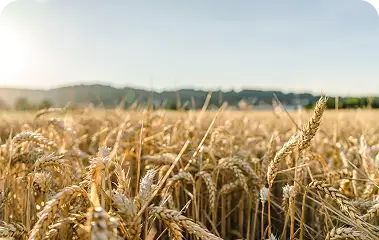
Wheat is grown as a Rabi crop, sown from October to December and harvested from March to May.
Punjab, Haryana, Uttar Pradesh, Rajasthan, Bihar, and Madhya Pradesh are among the major wheat-producing states.
Wheat is grown as a Rabi crop, sown from October to December and harvested from March to May.
Punjab, Haryana, Uttar Pradesh, Rajasthan, Bihar, and Madhya Pradesh are among the major wheat-producing states.


